
Going against the grain
When it seems like everyone is going one way - leveraging on a trend - zagging can be damn tough. It certainly takes guts, but if done right can show principles and act as excellent ‘counter-marketing’ in a way.
Okay, that was a clunky opening paragraph, but you get what I’m saying - taking an opposite stance to what everyone is doing (or is conditioned to do) can garner attention, and hey, isn’t that what marketing is supposed to do anyway?
Recently, I came across this headline, based on iOS drawing app Procreate.
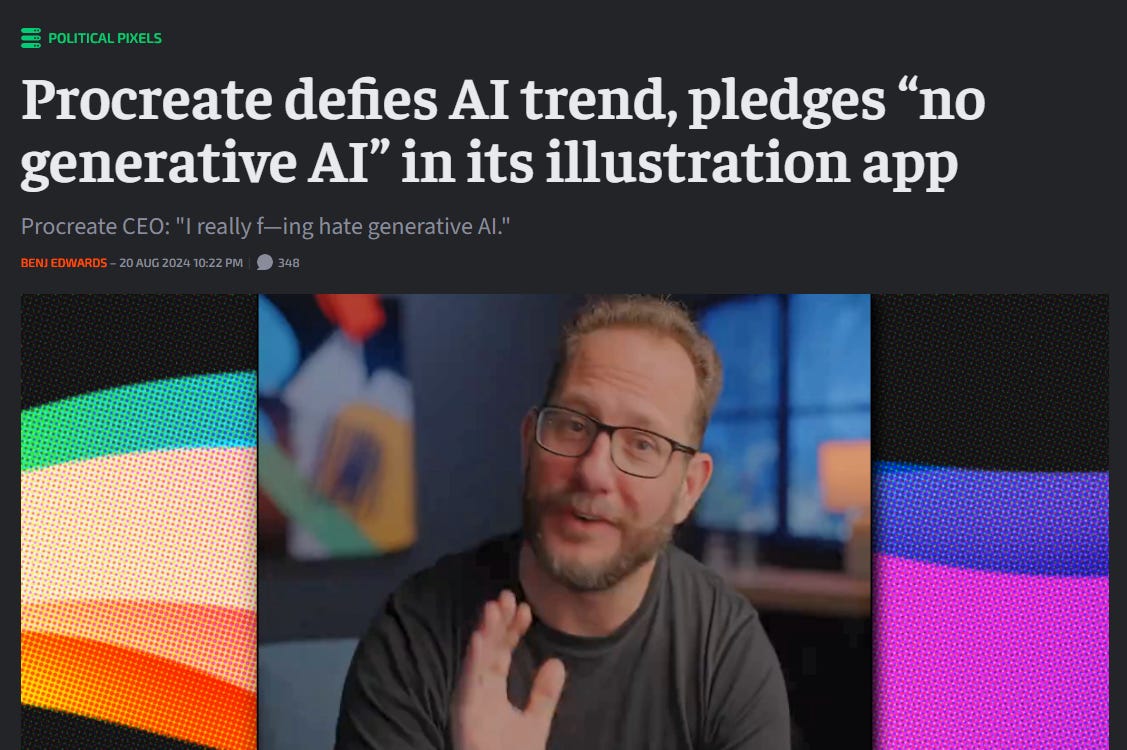
The CEO of the company announced this in a tweet and elaborated on it in a blogpost. The company’s stance was met with an expected polarised response - some people loved it, some people said the app would miss the bus and a lot of subscriptions.
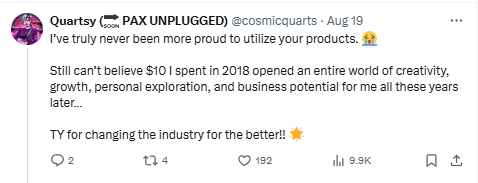
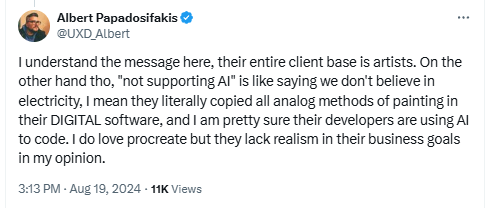
This post is not about the merits of generative AI or what it means for art - that’s a topic for later - but indeed about what taking a stance against it meant for Procreate. Now, it being a small unlisted company, we can’t be sure of the impact, but boy was there a lot of positive goodwill among artists and creatives.
I like it when brands take a stance. Not saying that they should weigh in on politics and human rights (unless that’s what the brand is built on), but just… standing for something their audience feels strongly about. A terrific example of this happened in the beginning of last year when luxury fitness chain Equinox refused to play along to January discounts.
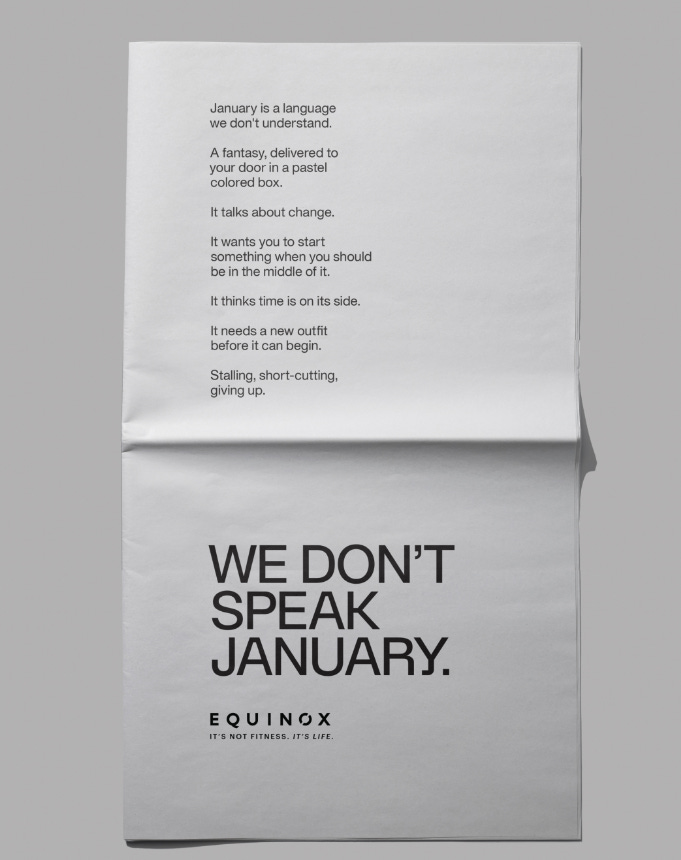
Eyebrow-raising. Got praise, got criticism. As any sharp opinion should. I reckon those who swear by the Equinox lifestyle loved it - objective achieved.
I am reminded of another example - in 2015, outdoorswear retailer REI said that they’re not playing along to Black Friday. For what was supposed to be the consumer spending day of the year, a retailer would choose to close its stores. It wasn’t a stunt - a point was being made. Which was - get outside, something the brand stands for. From an article talking about the campaign’s inception:
Then someone—no one with the company can say who, exactly—tossed out a radical idea: What if REI just completely shut down on Black Friday, the day after Thanksgiving, which in the last 20 years has turned into a mass mania of consumerism? Shutter all the stores. Turn off the online sales. Let the employees spend the day playing outdoors with their friends and families.
“Someone said, ‘I know we could never do it,’” Ben Steele, REI’s chief creative officer, told me recently. “And then we were like, ‘Well, why couldn’t we do it?’ The next response was, ‘How do we do this?’”
And that turned into one of the best brand ideas this century, something that continues to this day.
Humans are wired to notice patterns. When something breaks that pattern, we pay attention to it.
Our hunter-gatherer ancestors would pay attention to something striped and yellow in a field of green, to survive.
The same instincts make us pay attention to a brand that says “don’t buy us!” in an era of constant “please buy us”.
Which is why, 4 years after I saw it, this remains an Instagram ad I keep thinking about:

Simple, eye-catching, brilliant. How many ads would showcase a negative review of themselves?
I’ll end with one of my favourite ads of all time - where a car makes fun of itself for 80% of the video.
And a bonus:
I think I deviated slightly from the point I made at the start with Procreate - but if you want more examples of brands taking stances, check out this piece I wrote on more examples of brands doing that (including MAGA coffee).
Reads
Amit Gurbaxani - who’s been writing on India’s independent music scene for years now - gives us 24 insights for the country’s music industry in 2024.
How Comic Sans became the Crocs of fonts (what a headline!)
And ok, one - just one - from the US Elections. Why Dems won’t build their own Joe Rogan.
See you next week with some more stuff from the internet,
Chuck